
EVERIE Sous Vide Container 12 Quarts Review: Collapsible Lid, Rack, Insulation Sleeve for Anova

Estimated reading time: 9 minutes
Key Takeaways
- The EVERIE sous vide container offers a compact, efficient 12-quart volume ideal for home cooks seeking controlled sous vide setups.
- Its collapsible hinge lid sous vide design adds convenience in storage and reduces evaporation during long cooks.
- The included Anova compatible sous vide rack stabilizes bags for consistent cooking and prevents movement.
- A sous vide insulation sleeve enhances thermal retention, cutting down thermostat cycles and improving cooking efficiency.
- This container balances heat-up time, energy use, and cooking capacity, making it a practical choice for many sous vide enthusiasts.
Table of contents
- Key Takeaways
- What This Kit Includes
- Three Key Reasons This Product Matters
- Specifications Table
- Energy Example to Test Assumptions
- Practical Setup and Workflow
- Thermal Control Tips
- Pros and Cons
- Common Assumptions to Challenge
- Alternatives and When to Choose Them
- Care, Maintenance, and Safety
- User Test Scenarios
- Verdict and Buying Guidance
- Actionable Steps Before Purchase
- Short Checklist for First Use
- Final Notes
- Frequently Asked Questions
What This Kit Includes
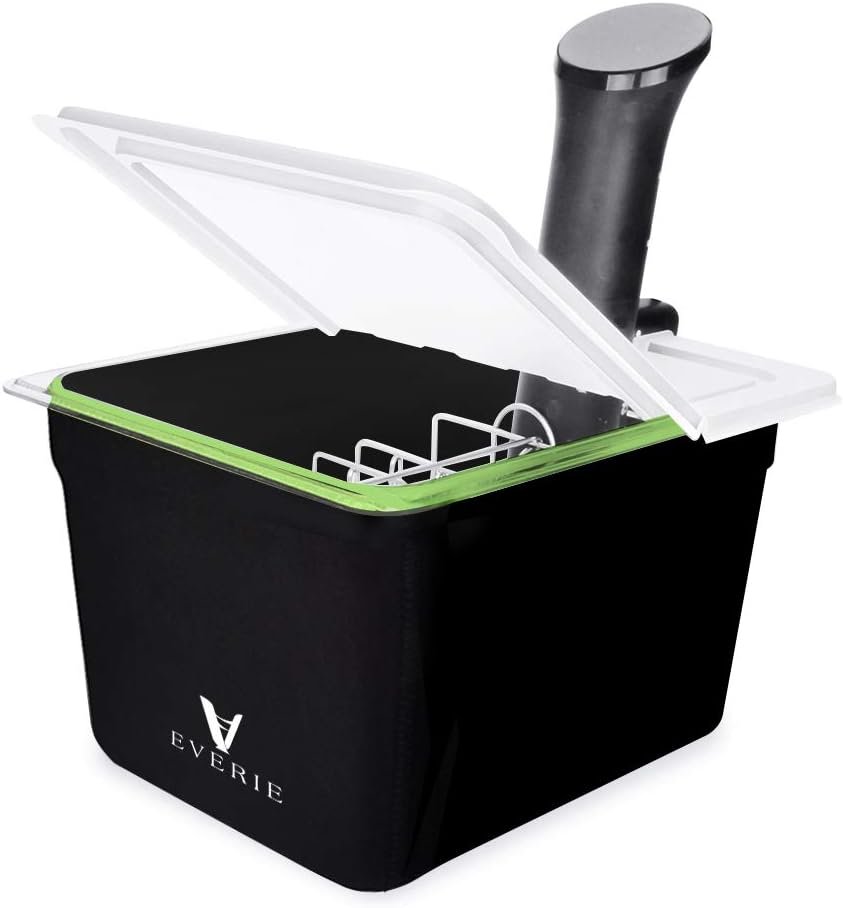
- 12-quart polypropylene container, molded base for stability
- Collapsible hinge lid with gasket-friendly slots
- Removable sous vide rack to hold bags upright
- Insulation sleeve sized to fit the container for heat retention
- Compatibility notes for hanging any Anova cooker model
Three Key Reasons This Product Matters
- Control, by keeping water volume low, you reduce energy use and shorten heat-up time. A 12-quart volume balances capacity and efficiency.
- Fit, the collapsible lid and rack create organized space for multiple bags. This reduces movement of bags while circulator runs.
- Thermal efficiency, the insulation sleeve limits surface heat loss. Less loss equals fewer thermostat cycles for the circulator.
Specifications Table
| Feature | Detail |
|---|---|
| Volume | 12 quarts (12 x 0.946 liters, roughly 11.35 liters) |
| Material | Polypropylene container, flexible fabric sleeve |
| Compatibility | Designed for Anova and most sous vide circulators that clip or clamp |
| Components | Container, hinge lid, rack, insulation sleeve |
| Use case | Small to medium batch sous vide, home kitchens, compact setups |
Energy Example to Test Assumptions
Use simple physics to judge heating load. Heating water has a known energy requirement. One quart equals 0.946 liters. A 12-quart load equals about 11.35 liters, roughly 11.35 kilograms.
Raising 11.35 kilograms from 20 °C to 55 °C uses energy equal to mass times specific heat times temperature change. Specific heat for water equals 4.186 kJ/kg·K. Multiply 11.35, 4.186, and 35 degrees. The result equals about 1,660 kJ. Convert kilojoules to kilowatt-hours by dividing by 3,600. The number equals about 0.46 kWh for a single heat-up.
Practical takeaway, you see how water volume affects energy use. Lower volume, faster heat-up, less energy waste. The 12-quart size supplies a middle ground between stability and efficiency.
Practical Setup and Workflow
Mounting the Circulator
Clip the Anova circulator on the container rim. Align pump intake with open water column. Use the lid cutout or hinge to route the circulator head while keeping most surface covered. For more on circulator compatibility, check this product’s compatibility details here.
Bag Management
- Use the rack to separate bags. This avoids crowding.
- Place heavy items near the rack base. This prevents bag float and keeps immersion steady.
- Use clips if a bag floats. The container rim supports low-profile clips.
Thermal Control Tips
- Fit the insulation sleeve before heating. Sleeve reduces convective loss from the side walls. For a comparison, see the neoprene insulating sleeves reviewed in the VÄESKE Large Insulated Sous Vide Container post here.
- Keep the lid mostly closed during long cooks. That reduces evaporation and keeps water level stable.
- Check water level before long cooks. Add hot water if level drops. Avoid cold top-offs during critical phases.
Pros and Cons
| Pros | Cons |
|---|---|
|
|
Common Assumptions to Challenge
- Assumption, bigger container equals better stability. Counterpoint, excessive volume increases heat-up time and energy use. Small volume improves response to temperature changes. The sweet spot depends on your batch size.
- Assumption, any lid suffices. Counterpoint, a lid designed for a circulator reduces evaporation and heat loss more than a generic cover.
- Assumption, insulation is optional. Counterpoint, insulating sides reduces pump duty cycles and lowers energy use over long cooks.
Alternatives and When to Choose Them
- Use larger commercial-style containers for big batches. Choose when feeding many guests. For example, the VÄESKE Professional Large Insulated Sous Vide Container with Lid and 2 Racks offers a 26-quart capacity; details can be found here.
- Use small mason-jar or vacuum chamber methods for single servings. Choose for precision with tiny portions.
- Choose the EVERIE 12-quart when you want a compact, storable solution that supports most home sous vide workflows.
Care, Maintenance, and Safety
- Wash the container with warm soapy water. Rinse thoroughly.
- Do not place the container on direct heat. The polymer resists hot water, not stove flame.
- Remove the insulation sleeve and dry fully after use. Fabrics trap moisture and odors when left damp.
- Store the lid collapsed to save space and to avoid stress on hinge points.
User Test Scenarios
Three short scenarios highlight fit and limits.
- Single steak at 55 °C for 1.5 hours. Heat-up is quick due to low volume. Rack keeps bag vertical. Sleeve limits temperature drift.
- Two chicken breasts at 66 °C for 2 hours. Bags stay separated. Lid reduces evaporation over the cook. Water level drops slightly; top-up needed after one hour on long runs.
- Party batch of 6 small bags. The rack helps, but crowding pushes bags toward the edge. Use a larger container for multiple racks.
Verdict and Buying Guidance
Who benefits. You, if you cook sous vide at home and want organized, efficient setup. The package saves storage space. The sleeve helps energy use for long cooks. The rack improves bag stability.
Who should choose otherwise. You, if you run large-batch sous vide for events or a small business. Choose larger, commercial containers for those needs.
Actionable Steps Before Purchase
- Measure your usual batch size. Match volume to common cook loads.
- Check your circulator mounting style. Confirm the clip or clamp fits the container rim.
- Plan where to store the kit. The lid collapses for compact storage.
Short Checklist for First Use
- Inspect parts on arrival. Confirm the rack and sleeve are present.
- Run a water-only heat cycle at target temperature for 30 minutes. Look for leaks and monitor stability.
- Trim bag corners if float occurs, or use clips on the lid rim.
Final Notes
Keep decisions empirical. Use the energy example to size your system. Test a session before a critical cook. Adjust water level and sleeve position to match your circulator.
Frequently Asked Questions
- Is the EVERIE 12-quart container compatible with all Anova sous vide models?
- Yes, it is designed to fit most Anova circulators that clip or clamp to container rims, ensuring a secure and stable setup.
- Can the collapsible hinge lid be used during cooking?
- Absolutely. The lid allows the circulator head to protrude while reducing evaporation and retaining heat, improving efficiency during longer cooks.
- How effective is the insulation sleeve in retaining heat?
- The insulation sleeve significantly reduces convective heat loss, which reduces thermostat cycling and lowers energy consumption over time.
- Is the container suitable for large batch sous vide cooking?
- This 12-quart container is best suited for small to medium batches. For large batches, consider commercial containers like the VÄESKE 26-quart insulation sleeve option here.
- How should I maintain the container and accessories?
- Wash the container with warm soapy water, avoid direct stove heat, dry the insulation sleeve fully, and store the lid collapsed to protect hinges.
}