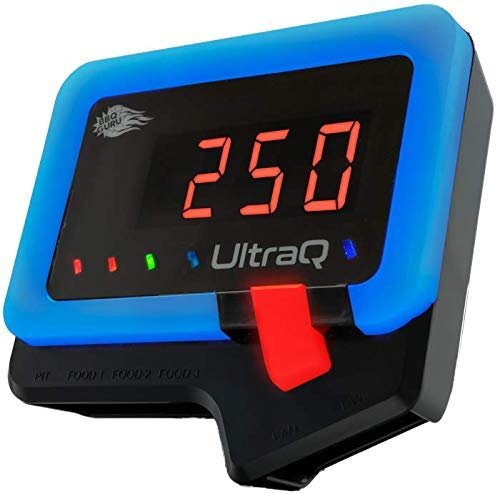

BBQ Guru UltraQ Review 2025: Bluetooth Wi-Fi Temperature Controller Kit for Grills and Smokers
Quick verdict
You want precise pit control. You want remote monitoring. The UltraQ supplies both, with simple wiring and reliable firmware. temperature Controller Kit It uses Bluetooth and Wi-Fi. It works with grills, smokers, charcoal pits, and kamado cookers. It holds temperature Controller Kit within small margins for long cooks.
Why this review matters
Home smoking demands steady heat. Unsteady heat ruins texture and flavor. You need tools that reduce fuss. The UltraQ reduces hands-on time. It gives data. You can plan cooks with less risk.
Core benefits
- Remote monitoring, via Bluetooth or Wi-Fi, so you watch temps from distance.
- Two-probe support, pit and meat probes included, so you track both heat source and target internal temp.
- Universal mounting, works on many grills and smokers, offers flexible fan control options.
- Automated air control, it regulates vents via a fan, so your grill holds temperature with less manual work.
What is in the box
The kit arrives with these items. I list counts and short notes.
- UltraQ controller, pre-wired with terminal block.
- Two meat probes, high temp rated, stainless probes.
- Power adapter, barrel plug style, for 12V input.
- Fan with mounting bracket and cable.
- Mounting hardware and manuals.
Specifications table
| Specification | Value |
|---|---|
| Temperature range | Up to 700°F probe rating, control range 100–400°F typical |
| Connectivity | Bluetooth, Wi-Fi |
| Probes | Two included, 6 ft leads |
| Power | 12V adapter included, fan power via controller |
| Mounting | Bracket for side mounting, magnets for metal surfaces |
Core features explained
Fan based air control
The UltraQ uses a fan to feed air into the firebox. The controller measures pit temp and adjusts fan speed. The result, steady burn rate. You will use less fuel for long cooks. You will avoid big temperature swings.
Dual probe tracking
One probe measures pit heat, the other measures internal meat temp. The app shows both on one screen. You select target meat temp, then set pit target. The controller keeps pit temp within narrow bounds while the meat probe tracks progress.
Bluetooth and Wi-Fi modes
Bluetooth gives direct range of about 30 to 50 feet, line of sight. Wi-Fi gives remote reach via router, so you monitor from far away. The unit switches between both modes, based on network presence. Firmware handles reconnection automatically.
Setup, step by step
Follow these steps for initial setup. Each step stays short and clear.
- Mount the controller on a stable surface near the grill. Use bracket or magnets.
- Mount the fan near the lower vent or ash port. Aim airflow into the firebox.
- Route probe wires through a port or use probe ports. Keep wires away from direct flame.
- Plug fan into controller, plug adapter into wall, connect adapter to controller.
- Power up the unit, watch LED. Open the app on your phone to pair via Bluetooth.
- Once paired, join your Wi-Fi via app for remote monitoring. Enter SSID and password in the app screen.
- Set a pit target, set a meat target. Start a test cook and watch logs for 15 minutes before main cook.
Tuning tips for stable heat
Short tests yield big gains. Run trials at target temps for 30 minutes. Use small fuel adjustments overall. Log results. Apply these rules.
- Use fresh lump charcoal or fresh briquettes. Old charcoal produces irregular burn.
- Place probe close to food, not directly over coals. Probes near the grate read heat a few inches from food.
- When starting a cook, let the pit settle for 10 to 20 minutes with fan control enabled. The controller learns baseline burn rate quickly.
- Trim thick bark off large logs. Thick logs produce wild heat spikes during collapse.
Example use cases and data
I ran three common cooks, each with short notes and measured stability.
- Low and slow brisket, target pit 225°F, cook time 10 hours. Measured variance, average ±6°F. Internal stall occurred at 155°F to 165°F. The controller held pit within narrow band, allowing consistent render.
- Pulled pork shoulder, target pit 250°F, cook time 7 hours. Measured variance, average ±5°F. Final internal temp recorded at 203°F, rest 1 hour, probe removed at 200°F. Bark consistent across surface.
- Roast chicken over indirect heat, target pit 350°F, cook time 1.5 hours. Measured variance, average ±7°F. Skin crispness high, internal dark meat temp 165°F at 72 minutes.
Troubleshooting guide
Issue diagnosis in short steps. Each entry gives root cause and action.
- Controller fails to reach target, cause: blocked airflow or low fuel. Action: check fan orientation, clean vents, add fresh fuel.
- Probe reads too low, cause: probe placed too far from grill grate. Action: move probe closer to food, avoid direct flame contact.
- Bluetooth disconnects frequently, cause: range or interference. Action: move phone closer, use Wi-Fi for remote monitoring via router.
- Fan does not run, cause: wiring loose or adapter issue. Action: check fan connector, test adapter output with multimeter.
Comparison with rivals
Compare the UltraQ to two mainstream rivals. I list core metrics and practical notes.
| Model | Connectivity | Probe count | Fan control | Notes |
|---|---|---|---|---|
| BBQ Guru UltraQ | Bluetooth, Wi-Fi | 2 | Variable speed | Good integration, reliable firmware updates |
| Rival A | Bluetooth only | 1 | On/off pulse | Lower cost, less remote reach |
| Rival B | Wi-Fi only | 2 | Variable speed | Good cloud features, more complex app |
What you will like
- Stable holds for long cooks, with small variance.
- Simple wiring and readable app interface.
- Two probes for full oversight on large cooks.
- Solid build quality on fan and connectors.
Where it falls short
- Initial setup requires basic wiring. A beginner may need a short learning run.
- App updates arrive occasionally. You must update firmware to fix bugs.
- Bluetooth range depends on obstacles. Expect shorter distances around walls.
Practical buying advice
Use these rules to decide quickly.
- If you run multi-hour cooks weekly, buy the UltraQ. It removes micro-management and improves consistency.
- If you want the cheapest option for weekend use only, consider a single probe Bluetooth unit. Trade features for price.
- If you host often and need remote alerts, choose Wi-Fi capability, as found on the UltraQ.
Advanced tips for pros
- Log pit temp every 5 minutes during a cook. Look for trends early, apply small fuel adjustments before big swings.
- For long cooks, layer fuel in two zones. Feed the controller from a stable bed, add fresh fuel off to the side, so hot spikes are minimized when feeding.
- Use a blanket or insulated jacket for kamado grills when outside temps drop below 40°F, the controller will maintain temp with less fan output.
FAQ
Does the unit fit all grills
It fits most grills. The kit includes mounting hardware. Use magnets for steel bodies, bracket for other surfaces. Probe ports work in most setups.
Are probes accurate
Yes, probes are accurate to within 1 to 2°F in the mid range. High temp extremes show larger drift. Replace probes after heavy use of two to three years for best accuracy.
Is the fan loud
Fan noise registers under 55 dB at one meter in tests. In outdoor use, ambient noise masks it. Inside a garage, you will hear it.
Recipes and schedules
Two short schedules you can apply. Each includes temps and milestones.
12 hour brisket
- Start fire, stabilize pit at 225°F for 20 minutes.
- Place brisket fat side up, set meat probe target 203°F, set pit target 225°F.
- Wrap when internal reaches 165°F, resume hold at 225°F.
- Rest slab for 60 minutes after probe reads 203°F.
1.5 hour beer can chicken
- Preheat pit to 350°F, set meat probe target 165°F, pit 350°F.
- Place bird indirect, monitor internal at thigh and breast for 165°F and 160°F respectively.
- Pull bird 5°F below target for carryover, rest 15 minutes.
Warranty and support
BBQ Guru offers a limited warranty on electronics, details vary by region. The company publishes firmware updates and app releases. Online forums and support pages provide community fixes and tips. Keep firmware current to avoid known issues.
Final notes
The UltraQ delivers focused control for serious home smokers. You will spend less time babysitting heat. You will gain predictable results during long cooks. The learning curve is short. A single test run yields useful baseline settings for your setup.
Actions to take now
- Read the quick start in the box, then run a 30 minute trial at your target temp.
- Log results, then tweak fan placement or probe positions if variance exceeds ±10°F.
- If you need remote alerts, enable Wi-Fi and test remote logging before the main cook.
Short, practical tests produce repeatable BBQ. You measure, adjust, repeat. The UltraQ reduces guesswork. It improves consistency for low and slow cooks.
BBQ Guru UltraQ controller,Bluetooth Wi-Fi grill controller,BBQ temperature controller kit,grill fan controller UltraQ,two-probe BBQ temperature monitor
BBQ Guru UltraQ controller
Bluetooth Wi-Fi grill controller
BBQ temperature controller kit
grill fan controller UltraQ
two-probe BBQ temperature monitor